
Every Mile. Every Receipt. One App.
Mileage tracking is coming to SparkReceipt. Stop juggling separate apps for mileage and expenses.
Your miles, receipts, gas station charges, parking tickets, and toll receipts will all live in one place. One app. One report. Every deduction captured. Start organizing your expenses now — when mileage tracking launches, your trip data will slot right in. Join the waitlist to get early access.
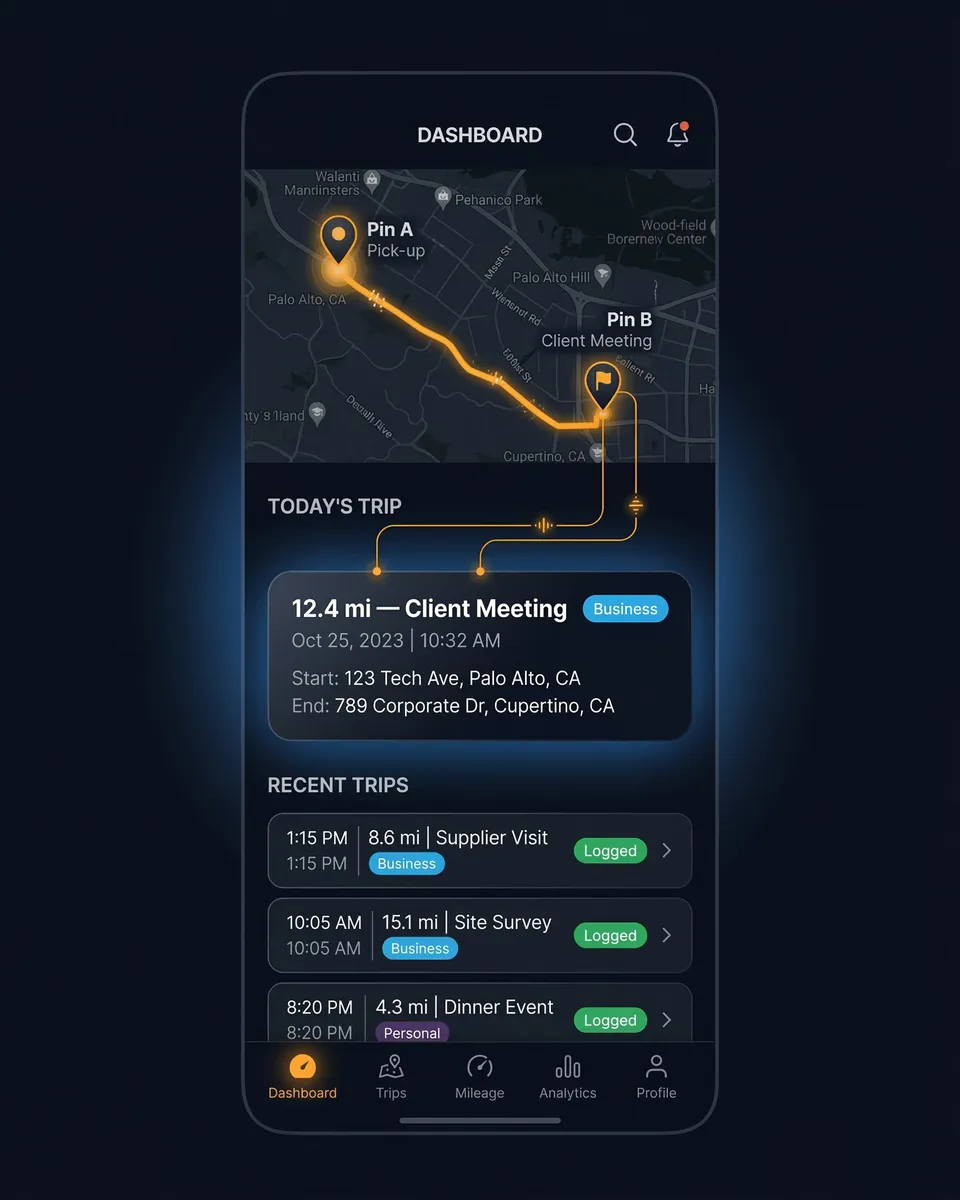
Business Owners in 80+ Countries Trust SparkReceipt


Mileage Tracking Before and After SparkReceipt
See what changes when your mileage tracker knows about your receipts

Separate Apps
- One app for mileage, another for receipts, a spreadsheet to combine them
- Gas, parking, and toll receipts tracked separately from trips
- Scrambling to reconstruct trip logs at tax time
- Missing deductions because vehicle expenses aren't linked to trips
- Paying for two or three apps that don't talk to each other

SparkReceipt (Coming Soon)
- Miles, receipts, gas, parking, and tolls in one app
- GPS logs every trip automatically — classify with a swipe
- IRS-compliant mileage logs created at time of travel
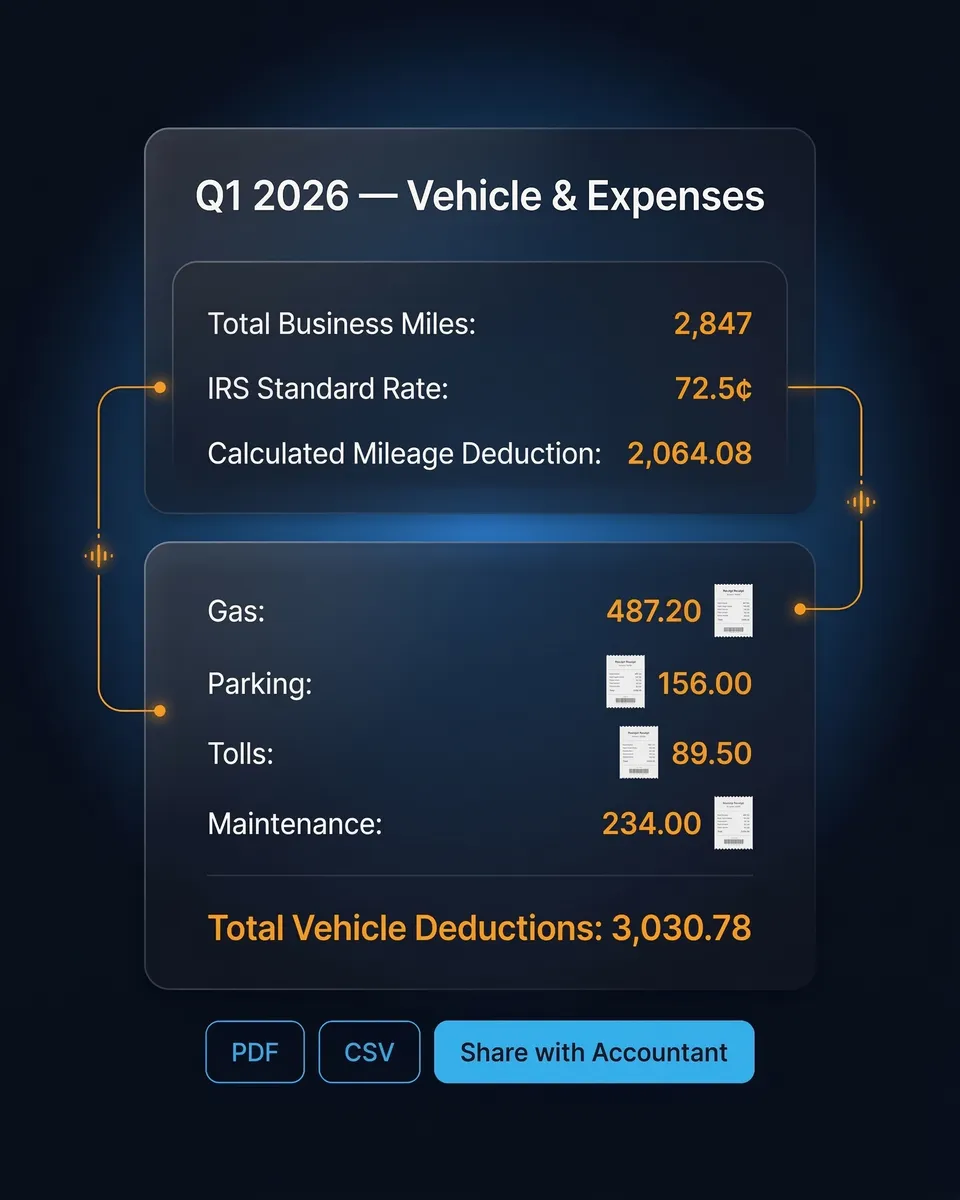
- One report with miles and expenses for your accountant
- AI receipt scanner already available — mileage coming soon
How SparkReceipt Mileage Tracking Will Work
Automatic GPS Mileage Tracking
SparkReceipt will use your phone's GPS to automatically detect and log business trips. Start driving and the app records your route, distance, and destination — no manual input needed. Prefer manual control? Start and stop trips manually, or enter mileage after the fact.
Classify Trips With a Swipe
After each trip, classify it as business or personal with a single swipe. Set recurring routes as favorites so the app learns your patterns. Every business trip is logged with the date, starting point, destination, distance, and business purpose — the five elements the IRS requires.
One Report With Miles and Expenses
Generate a single expense report that includes your mileage log alongside scanned receipts, categorized expenses, and tax totals. Export as PDF or CSV. Invite your accountant or bookkeeper to review your reports. Or sync directly to QuickBooks Online.
Why Your Mileage Tracker Should Know About Your Receipts
Most mileage tracker apps do one thing well: they log your miles. But miles are only part of the picture. Every business trip generates more than just mileage — there's the gas station fill-up, the parking garage downtown, the highway toll, the car wash before picking up a prospect, the oil change receipt in the glove compartment.
If your mileage tracker doesn't know about these expenses, you're leaving money on the table. SparkReceipt's mileage tracker is built into an AI-powered expense tracker — so every vehicle-related deduction lives in one place.
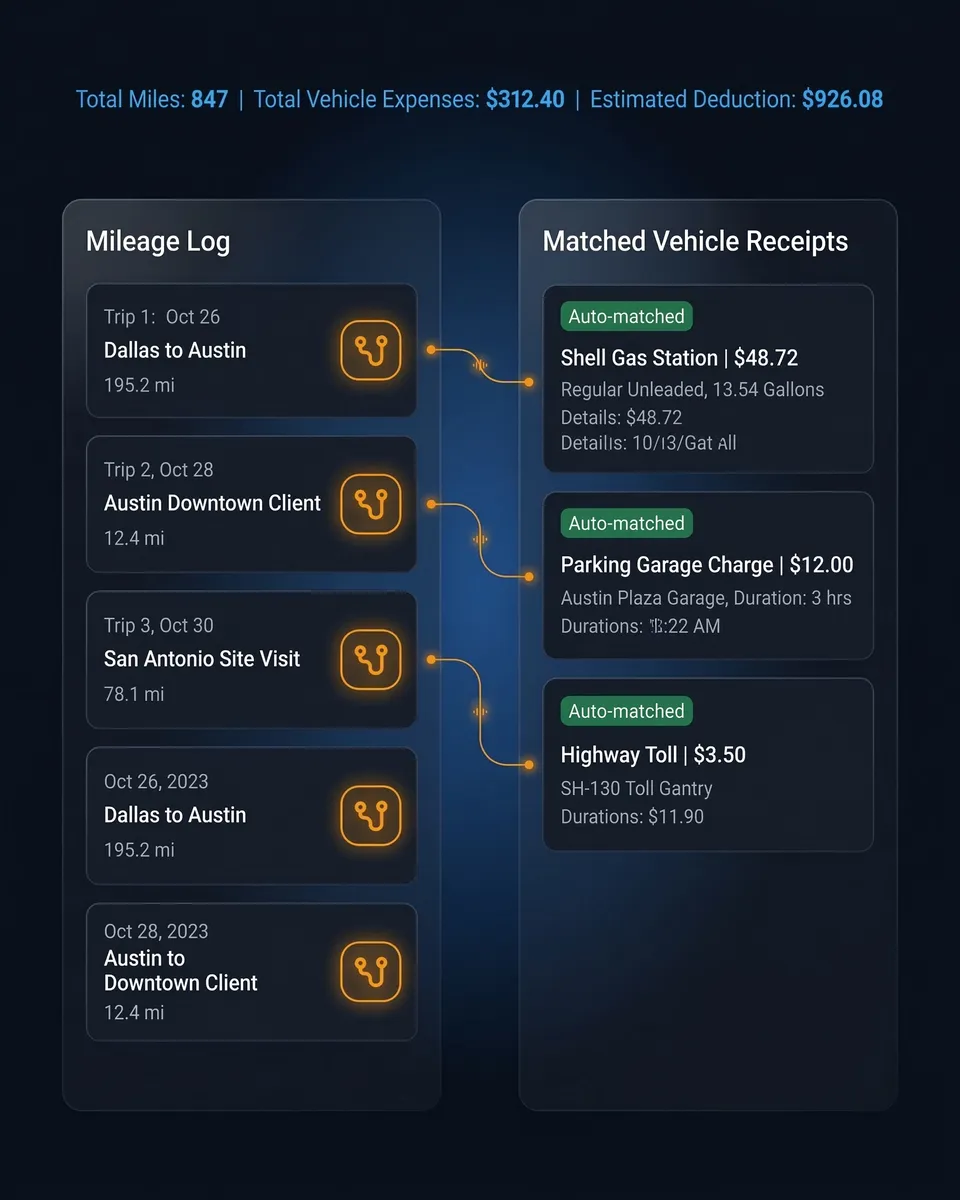
2026 IRS Mileage Deduction: The Numbers That Matter
The 2026 IRS standard mileage rate is 72.5 cents per mile for business driving. At 10,000 business miles, that's a $7,250 deduction. Missing just 100 miles per month costs you over $870 per year in lost deductions.
The IRS requires five elements for every deductible trip: date, destination, mileage, business purpose, and odometer readings. Logs must be created at or near the time of travel — not reconstructed months later. SparkReceipt's mileage tracker will capture all five elements automatically with GPS.
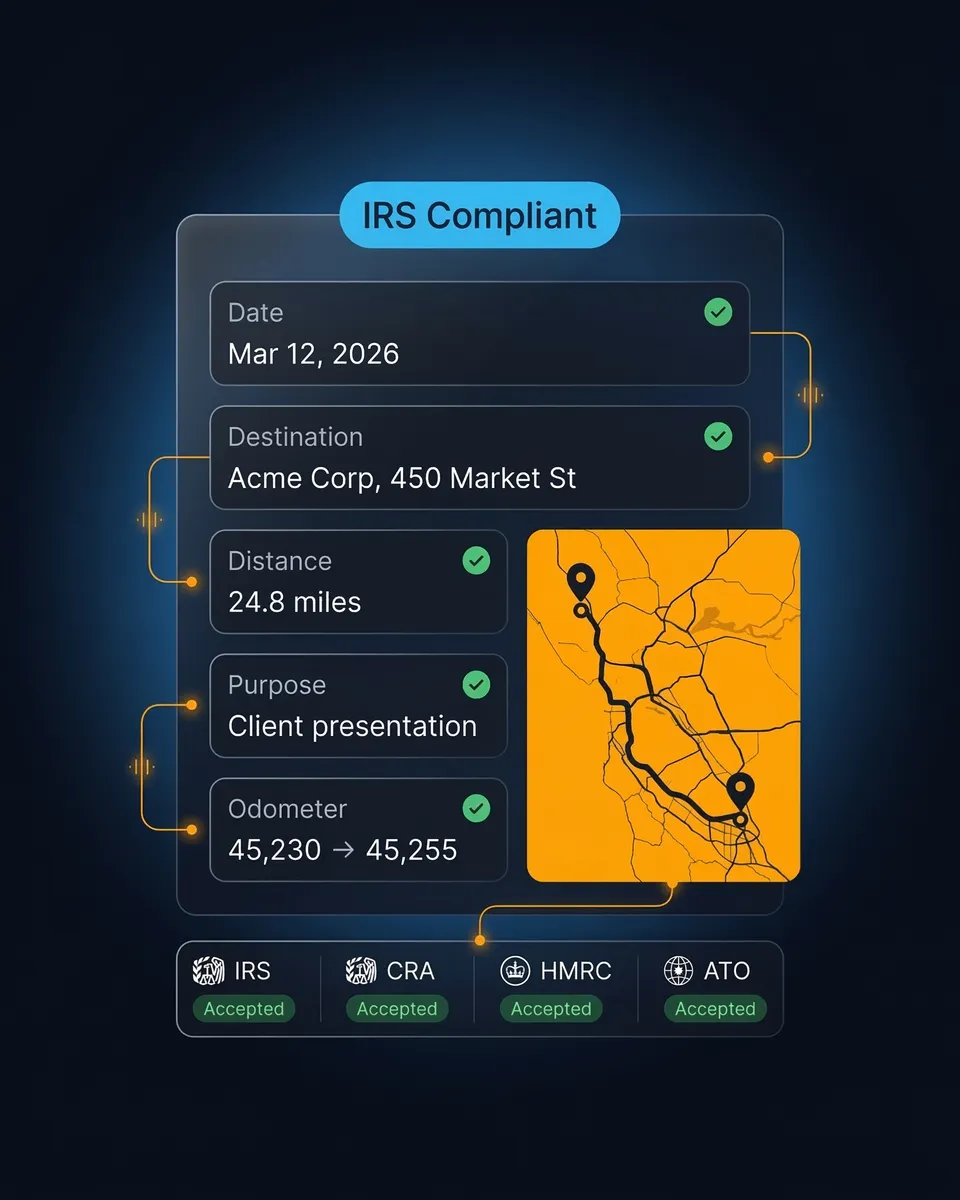
IRS-Compliant Mileage Logs, Automatically
Every trip is timestamped, mapped, and stored with your business purpose. Digital mileage logs are fully accepted by the IRS, CRA, HMRC, and ATO — and SparkReceipt will generate audit-ready reports whenever you need them.
Missing just 100 miles per month costs you over $870 per year in lost deductions at the 2026 rate. An automatic mileage tracker makes sure nothing slips through.
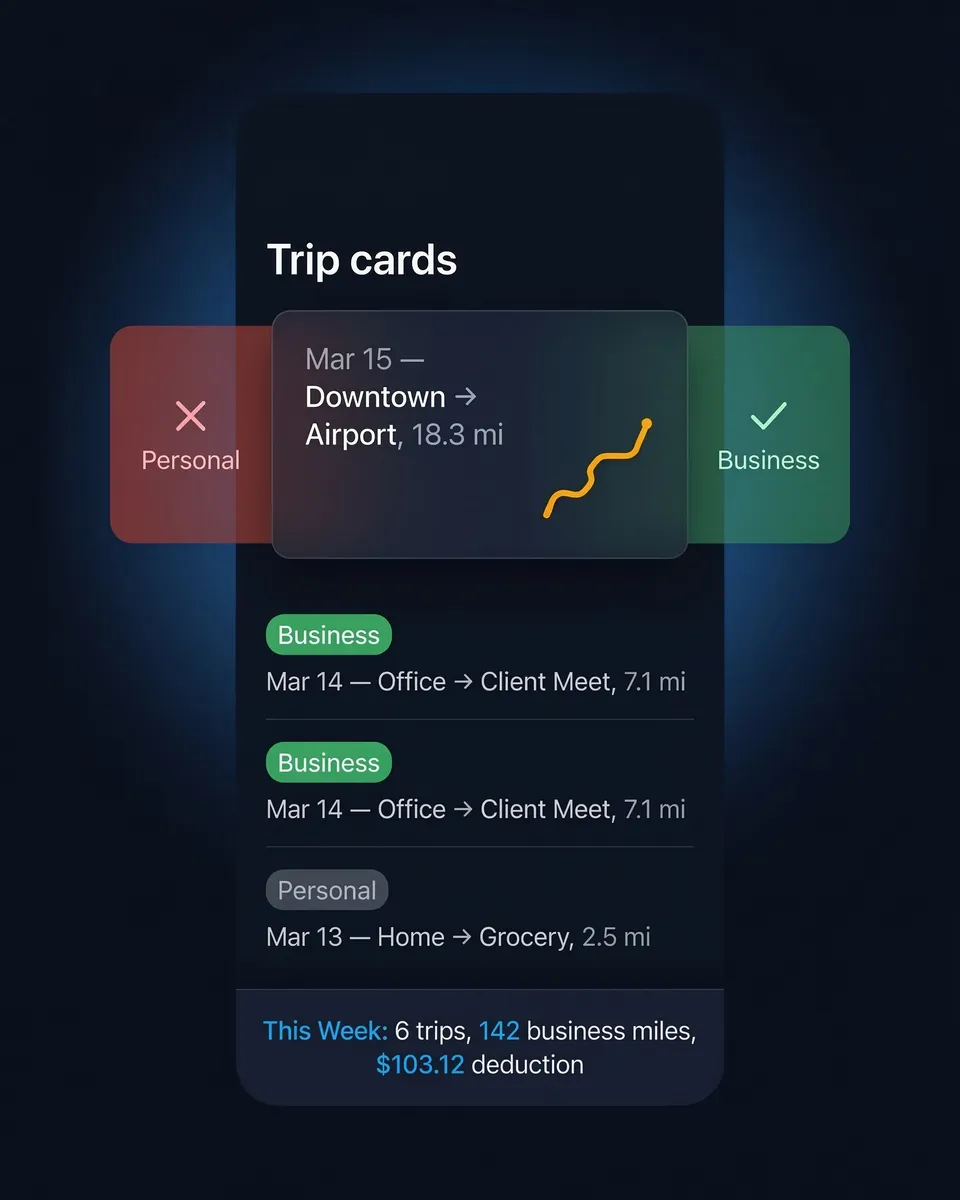
More Than a Mileage Tracker
While mileage tracking is coming soon, SparkReceipt already handles the rest of your expense management. AI receipt scanner snaps and extracts data in seconds. Email receipt capture connects your inbox automatically. Bank statement extractor matches transactions to receipts. Automatic categorization sorts expenses into tax categories. 150+ currencies with automatic exchange rate conversion. Invite your accountant or bookkeeper to review your reports.
When mileage tracking launches, it will integrate seamlessly with all of these features.
Built for Freelancers and Self-Employed
The One Big Beautiful Bill Act (OBBBA) permanently eliminated mileage deductions for W-2 employees. If you're self-employed, a freelancer, an independent contractor, or a gig worker — you're one of the few who can still claim the 72.5 cents per mile deduction on Schedule C.
At 10,000 business miles per year, the mileage deduction alone saves you $7,250. Add in gas station receipts, parking charges, tolls, and maintenance costs that SparkReceipt's AI receipt scanner captures automatically — and your total vehicle deduction could be significantly higher.
Loved by Small Business Owners
“SparkReceipt takes care of the busy work, allowing me to quickly save receipts and create expense reports.”

Tim Heller
HellerWeather · United States
“SparkReceipt has been a game-changer for me! It's made organising my expenses and accounts effortless, saving me loads of time.”

Tracy Duggan
Business Coach · United Kingdom
“Thanks to you, I'm actually looking forward to my year end FOR THE FIRST TIME EVER, when I can surprise my accountant with my completed accounts.”

Abigail Dombey
Net Zero Associates Ltd · United Kingdom
Frequently Asked Questions
Mileage tracking is currently in development and will be added to SparkReceipt soon. Join the waitlist to be the first to know when it launches and get early access.
SparkReceipt will use your phone's GPS to detect when you start driving and automatically log the trip — including date, route, distance, and destination. You'll classify each trip as business or personal with a simple swipe. Manual entry will also be available for trips you want to log after the fact.
Yes. SparkReceipt's mileage tracker will record all five elements the IRS requires: date, destination, mileage, business purpose, and odometer-equivalent data. Logs are created automatically at the time of travel — meeting the IRS contemporaneous record-keeping requirement. The same standards apply for CRA (Canada), HMRC (UK), and ATO (Australia).
The IRS standard mileage rate for 2026 is 72.5 cents per mile for business driving (up from 70 cents in 2025). Medical and moving mileage (military only) is 20.5 cents per mile. Charitable driving is 14 cents per mile. At 10,000 business miles, the standard mileage deduction equals $7,250.
Self-employed individuals, freelancers, independent contractors, gig workers (Uber, Lyft, DoorDash), and sole proprietors can deduct business mileage on Schedule C. The One Big Beautiful Bill Act (OBBBA) permanently eliminated mileage deductions for most W-2 employees — making this exclusively a self-employed benefit.
Because mileage is only one part of your vehicle deductions. Gas station fill-ups, parking charges, tolls, car washes, and maintenance are all separately deductible expenses that require receipts. Most mileage tracker apps don't capture these. SparkReceipt combines mileage tracking with AI receipt scanning — so every vehicle-related deduction is captured in one app.
The standard mileage rate (72.5 cents/mile in 2026) is simpler — just multiply business miles by the rate. The actual expense method requires tracking all vehicle costs (gas, insurance, repairs, depreciation) and applying your business-use percentage. Standard mileage works best for high-mileage, low-cost vehicles. Actual expenses work best for low-mileage, expensive vehicles. Important: if you choose actual expenses first, you can never switch back to standard mileage for that vehicle.
Absolutely. SparkReceipt's AI receipt scanner, email receipt capture, bank statement extraction, expense categorization, and report generation are all available now. Start organizing your expenses today — when mileage tracking launches, your trip data will integrate seamlessly with your existing expense data.
Be the First to Track Miles and Expenses Together
Join WaitlistComing soon — start tracking expenses now
Explore More Features
Receipt Scanner
Scan any receipt with AI in seconds
Expense Tracker
Track every business expense automatically
Email Receipts
Auto-import receipts from your inbox
Expense Reports
Generate reports in PDF, Excel, or CSV
Bank Statement Extractor
Extract and match bank transactions
Receipt Organizer
AI-powered receipt organization